
Iconic Branding
Book design for a definitive guide to timeless visual identities, combining trend forecasting with practical insight.

Client:
Rockport Publishers
Project Components:
Editorial Design
Author:
Bill Gardner
Editing:
Emily Potts
Rockport Publishing and author Bill Gardner, founder of Gardner Design and LogoLounge, invited us to design Iconic Branding, a new volume in the LogoLounge catalog. We led the book’s design, layout, visual pacing, and production, working closely with Bill and the Rockport team throughout the process. The book brings together decades of observations and collected logos and visual identities to explore how an understanding of visual trends can help designers and brand owners make more considered decisions towards the goal of building identities designed to last. That strategic perspective became an important part of how we approached the design of the book itself.
We designed Iconic Branding as a practical working resource rather than a book that needed to be read from beginning to end. The structure allows readers to open to any point and quickly find inspiration, examples, and insight. We developed a clean, pragmatic visual system that establishes a consistent framework for a large and varied collection of identities, while using pacing, shifts in scale, and changes in content density to create moments of emphasis and discovery. The underlying typographic system of Graphik and Produkt support the content with a confident and utilitarian voice while remaining deliberately unobtrusive alongside the presented identities and illustrations. The result is a book that functions both as a reference and as a visual study of how thoughtful organization, hierarchy, and pacing can shape the way design information is understood.

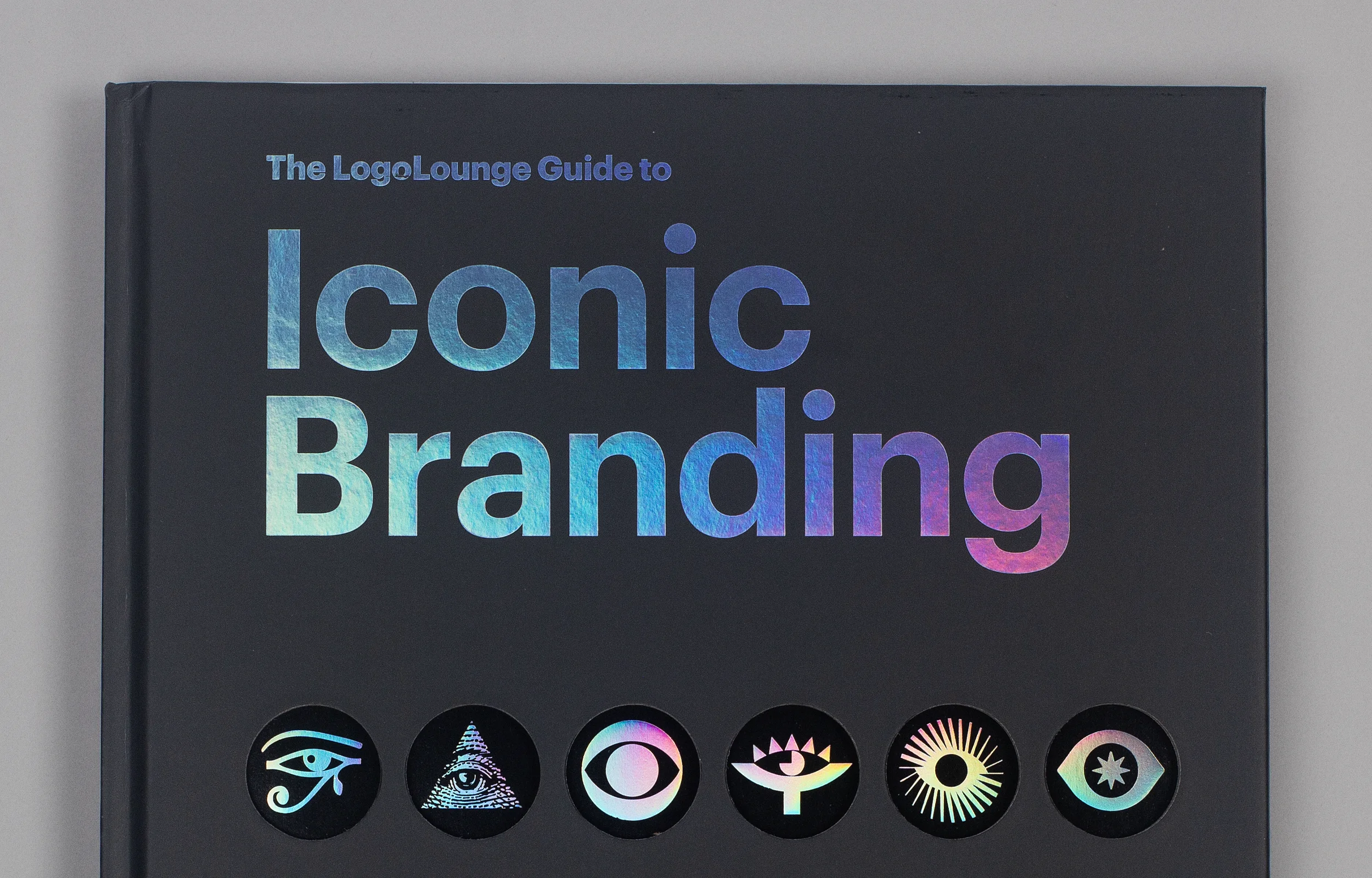

The cover design for Iconic Branding combines a custom die-cut and holographic foil stamping to create a bold, tactile presence inviting a closer look.
Opening the front cover reveals a fully foil-stamped sequence of thematic icons, tracing the evolution of familiar visual themes from early references to contemporary interpretations.


Each of the book’s eleven chapters is assigned a distinct color, carried through the chapter openers, running headers, and footers to create a consistent visual navigation system.

Each chapter of Iconic Branding opens with a large typographic introduction that distills the ideas to follow into an approachable, high-level overview. The expressive typographic treatment creates a clear transition into each new section while giving the content an inviting and engaging point of entry.

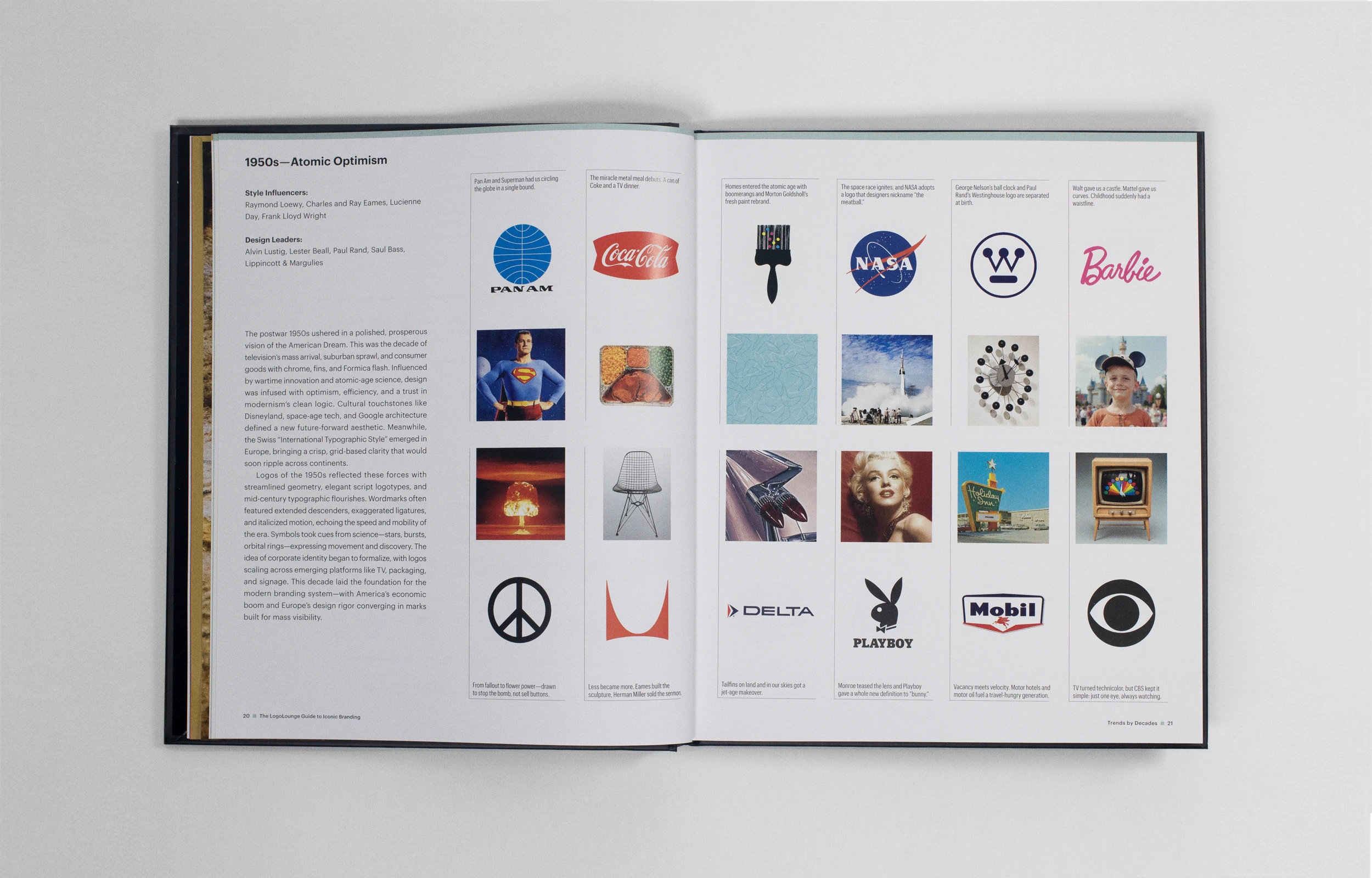

Iconic Branding offers plenty of visual inspiration, but goes deeper to examine how visual identities evolve and how design trends reflect the cultural pulse of their time. Bill Gardner explores the trajectories of emerging trends and the cultural influences that shape them, while considering how branding continues to shift alongside new technologies and changing behaviors.


Select features of Iconic Branding called for distinct information design treatments. We used the same pragmatic approach throughout, creating straightforward, accessible graphics that clarify, organize, and support the content.


